CRUDEmbed
CRUDEmbed is a configuration object used by CRUDRouter to define an embedded field on a parent model.
It does not manage embedded documents by itself. Instead, you pass it to CRUDRouter(embeds=[...]), and the router layer uses that configuration when exposing routes for embedded data.
Constructor
CRUDEmbed(model, embed_name)
The current implementation stores two values:
model: the embedded model classembed_name: the field name on the parent model that contains the embedded documents
Use it when child data is stored directly inside the parent record, for example addresses inside a user, instead of in a separate collection.
When to Use CRUDEmbed
Choose CRUDEmbed when:
- your data is naturally nested inside one parent document
- you want one-to-many style data without creating a separate child collection
- you prefer embedded structure over lookup/populate relationships
Key Point
Embeds are not auto-detected. You must define them explicitly and pass them to CRUDRouter.
Parameters
model: embedded model classembed_name: name of the field on the parent model that stores embedded items
Quick Setup
from typing import Optional

from pydantic import Field
from fastapi_crudrouter_mongodb import (
    CRUDEmbed,
    CRUDRouter,
    MongoModel,
    ObjectIdType,
)


class AddressModel(MongoModel):
    id: ObjectIdType | None = None
    street: str
    zip_code: str


class UserModel(MongoModel):
    id: ObjectIdType | None = None
    name: str
    addresses: Optional[list[AddressModel]] = Field(default_factory=list)


addresses_embed = CRUDEmbed(
    model=AddressModel,
    embed_name="addresses",
)


users_router = CRUDRouter(
    model=UserModel,
    db=db,
    collection_name="users",
    embeds=[addresses_embed],
    prefix="/users",
    tags=["users"],
)
Output Schema
If you use model_out, include the embedded field there as well so your API responses expose the embedded data clearly.
from pydantic import Field


class UserModelOut(MongoModel):
    id: str
    name: str
    addresses: list[AddressModel] = Field(default_factory=list)
What CRUDEmbed Defines
When passed to CRUDRouter, a CRUDEmbed object defines:
- which embedded model is used
- which parent field contains the embedded documents
- which embedded field
CRUDRoutershould expose through its embed support
In the example above, embed_name="addresses" tells the router that UserModel.addresses holds embedded AddressModel items.
Parent Model Expectations
In practice, the parent model should expose the embedded field using the same name as embed_name.
class UserModel(MongoModel):
    id: ObjectIdType | None = None
    name: str
    addresses: list[AddressModel] = Field(default_factory=list)
Keeping the field name aligned with embed_name is what allows CRUDRouter to connect the embed configuration to the correct parent field.
Notes
- The current
CRUDEmbedclass is a simple container for embed configuration. - The class itself does not validate constructor input.
- Route generation happens when the object is passed to
CRUDRouter.
Route Naming
Use plural resource names in prefixes for clearer REST-style URLs.
OpenAPI Documentation
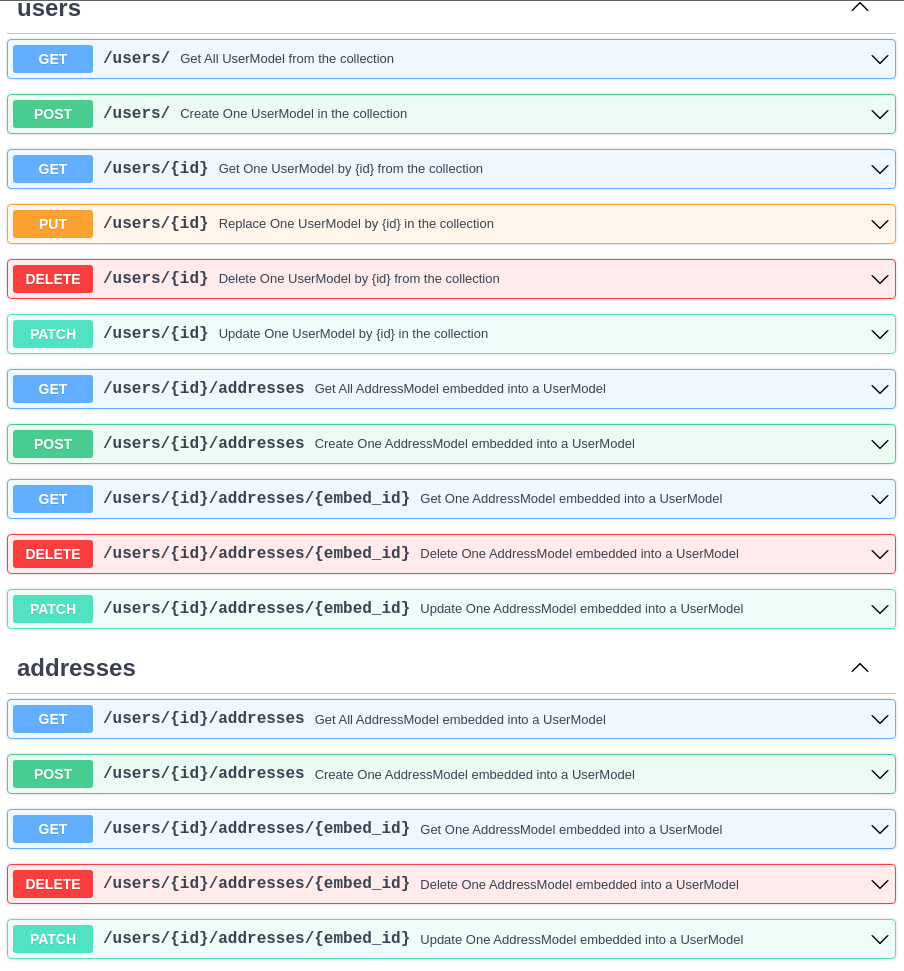
Embedded routes generated through CRUDRouter are included in the normal FastAPI OpenAPI output.
Related Features
- CRUDRouter: base router and shared options
- CRUDLookup: nested routes with separate child collection
- CRUDPopulate: resolve referenced ids into full documents